FOR RESEARCHERS
Explore with confidence. Traceable at every step.
Long-read native interpretation for rare disease and hereditary cancer. No Black-Box AI, but deterministic machine learning. Investigate on individual patient or cohort level.
the solution
The Cases You Sign Out.
From PacBio HiFi and Oxford Nanopore raw reads to actionable insights. Variant calling, prioritization, interpretation, and reporting - end to end, on one system.
Phenotype-based Prioritization
Focus on the most relevant variants
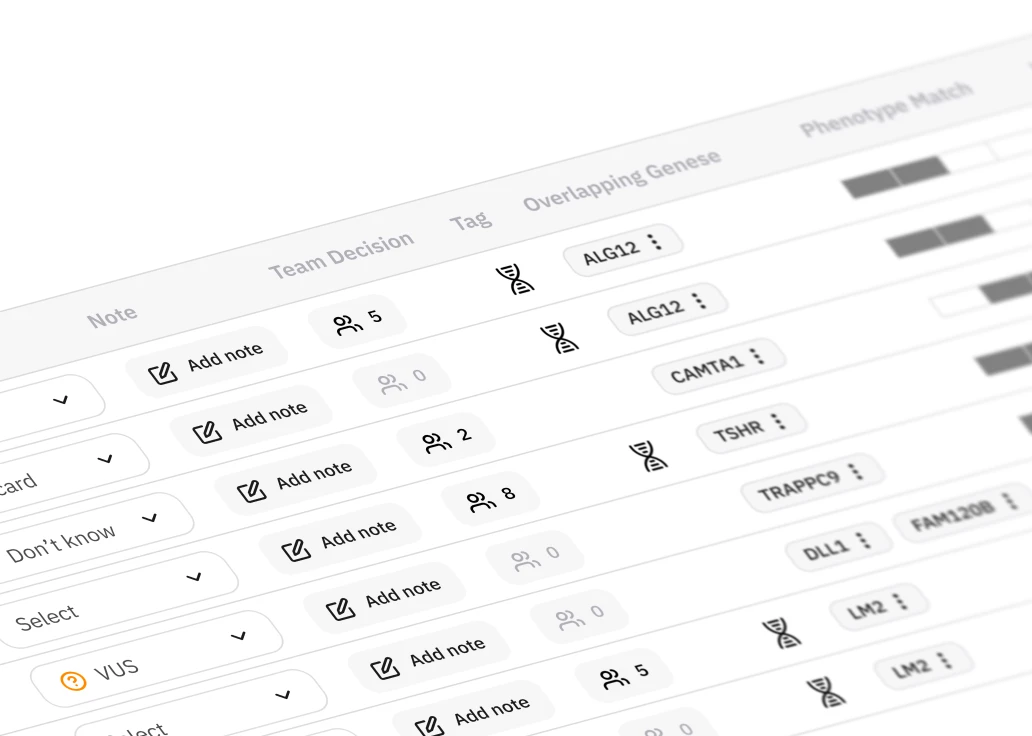
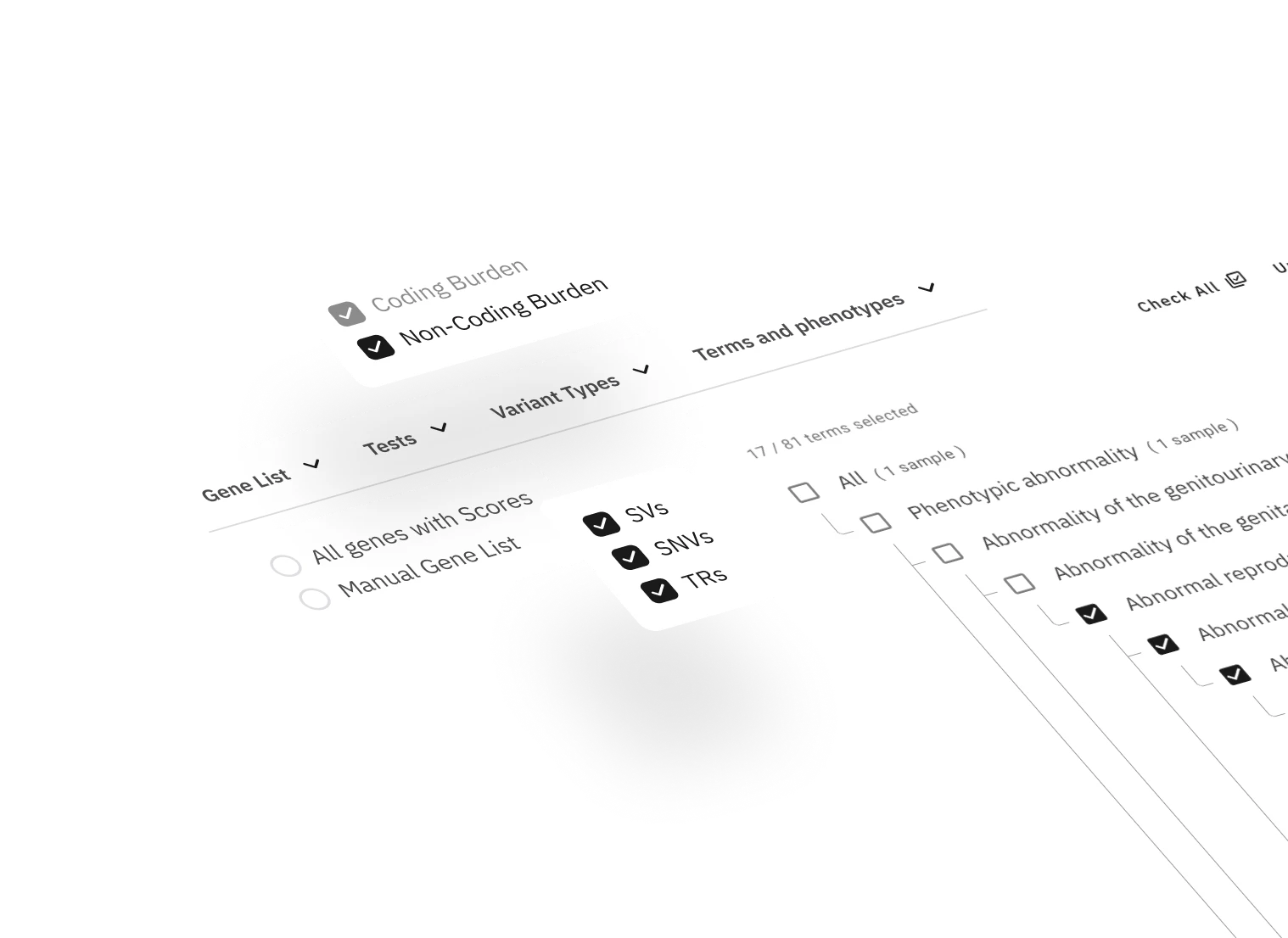
Phenotype-driven variant prioritization ranks candidate variants against the patient's clinical presentation, surfacing the most likely causal variants first. Enter HPO terms and Lucid weighs each variant by gene-phenotype association.
Non-Coding
Go beyond what is known today
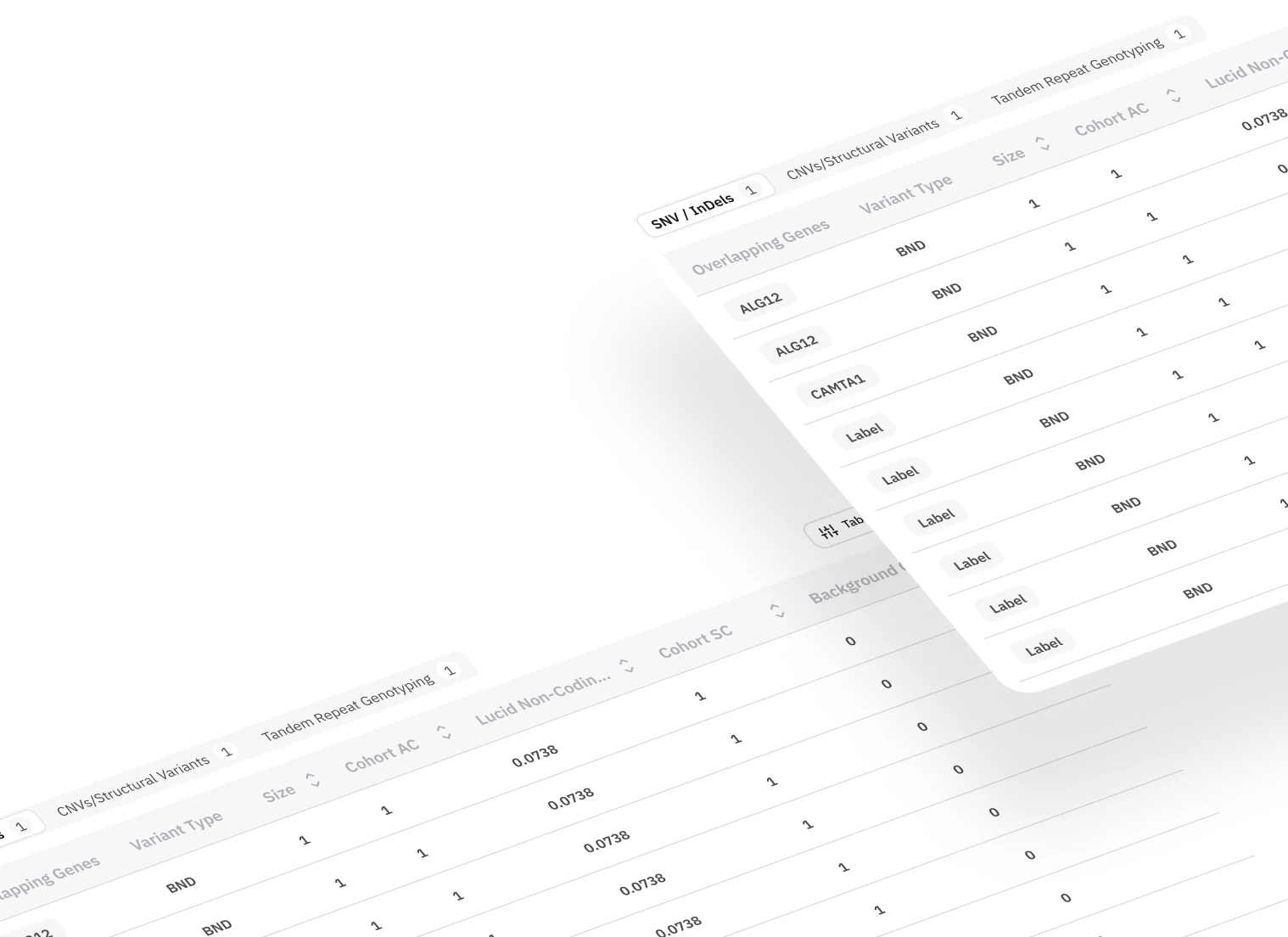
Analyze the non-coding genome directly — regulatory variants, deep-intronic changes, and structural rearrangements that disrupt enhancers and topologically associating domains (TADs).
Advanced filters
Adjust filters
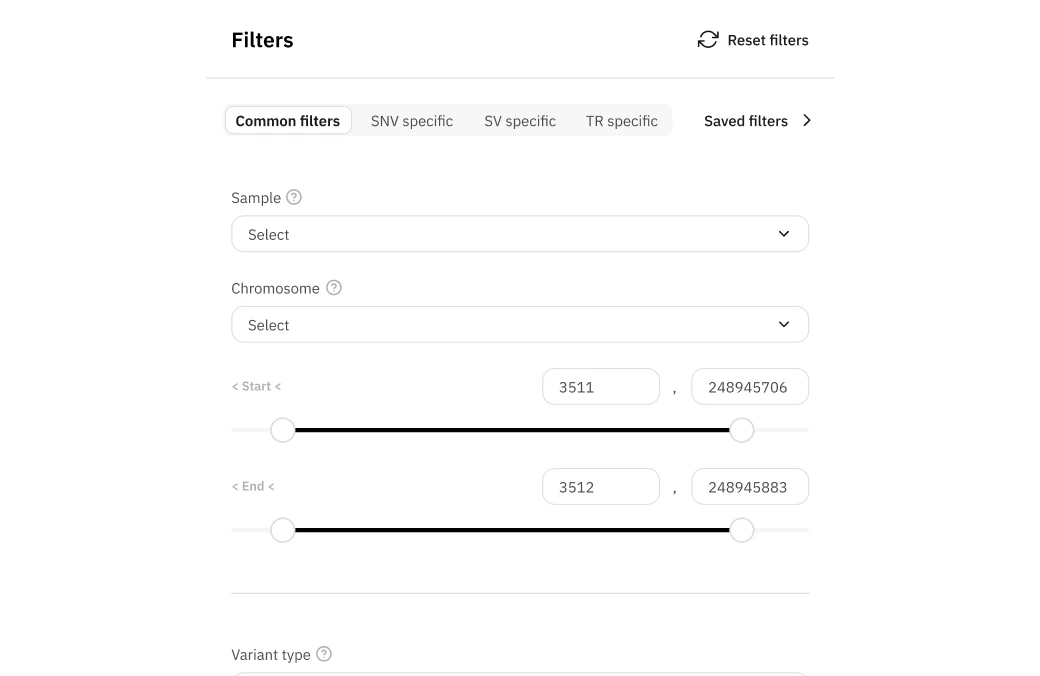
Advanced filtering lets you combine criteria — allele frequency, inheritance pattern, variant type, ACMG class, gene panels, and more — to narrow candidates to exactly the set you want to review.
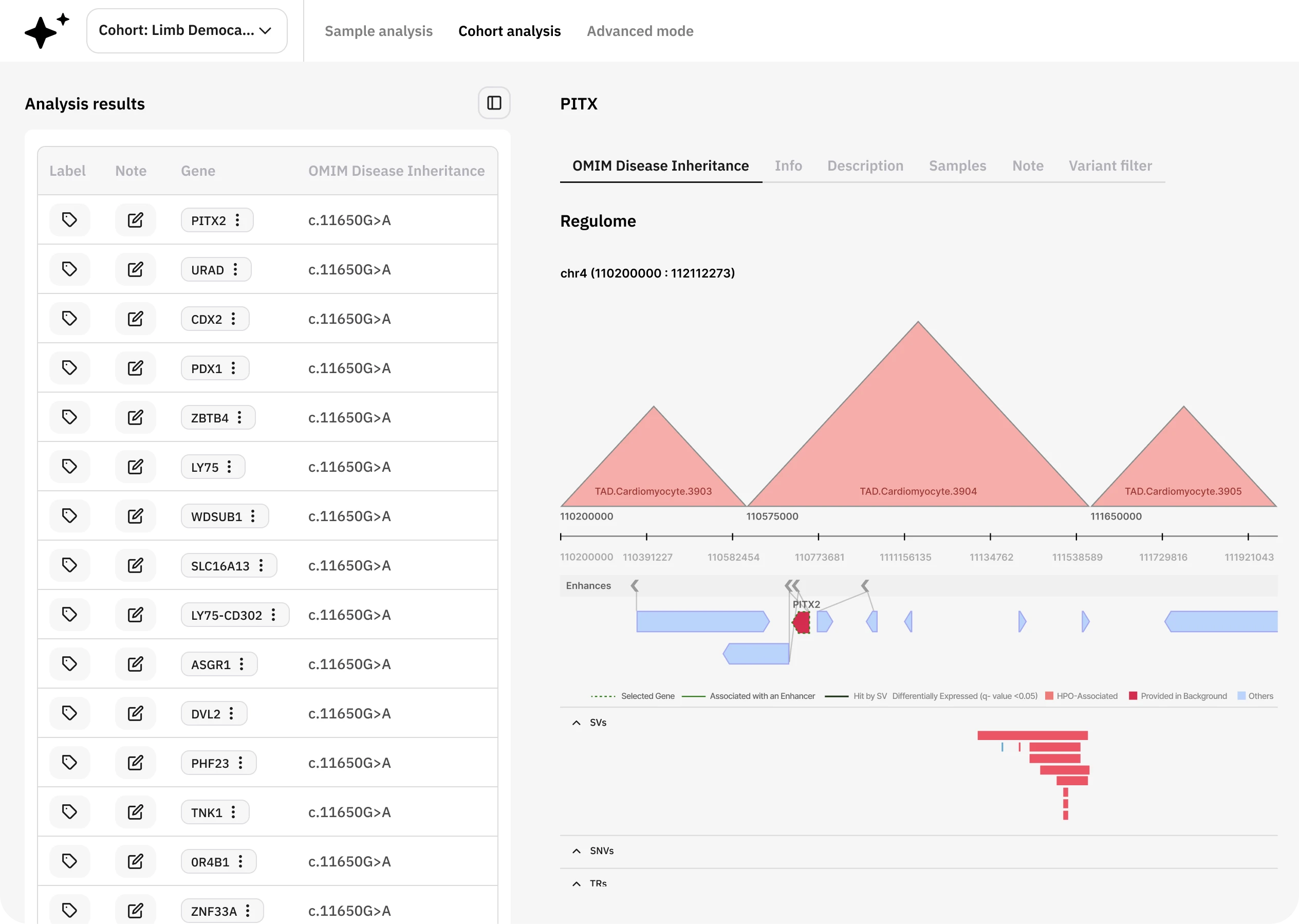
Cohort Analysis
Analysis across your cohort
Run population studies, rare-disease cohorts, or your whole backlog through one harmonized pipeline — then query across all of it, surface recurrent and candidate-pathogenic variants, and compute allele frequencies in your own population.
Circos Plots
Identify translocations
Map the entire genome in a circular layout, with arcs connecting distant loci to reveal translocations and other inter-chromosomal rearrangements at a glance. Trace structural connections across chromosomes - fusions, balanced translocations, and complex rearrangements.

Coverage Plots
Conduct quick genome-wide checks
Coverage plots display chromosome-specific read depth, making large structural variants immediately visible. Scan the genome at a glance - similar to karyotyping - to spot deletions, duplications, and other large-scale events before drilling into the detailed variant view.
Methylation
Differentially methylated regions
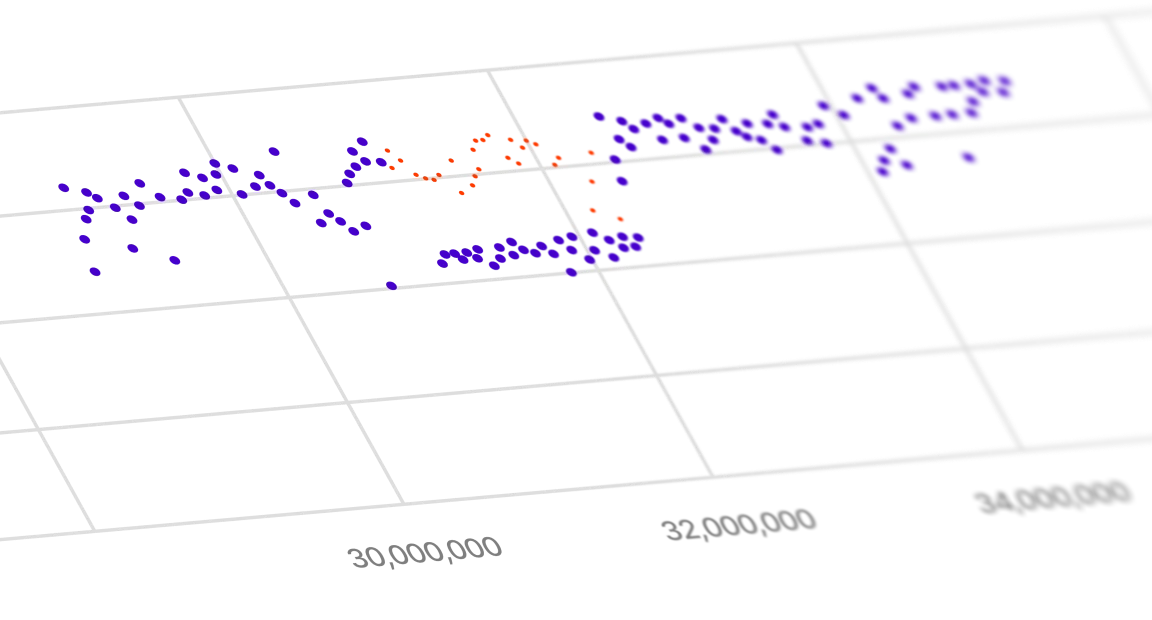
Lucid surfaces clinically relevant methylation alongside genetic variants from the same data: imprinting disorders, repeat-expansion methylation, and allele-specific patterns that explain cases genetics alone leaves open.
Complex Structural Variants
Identify and visualize structural variants
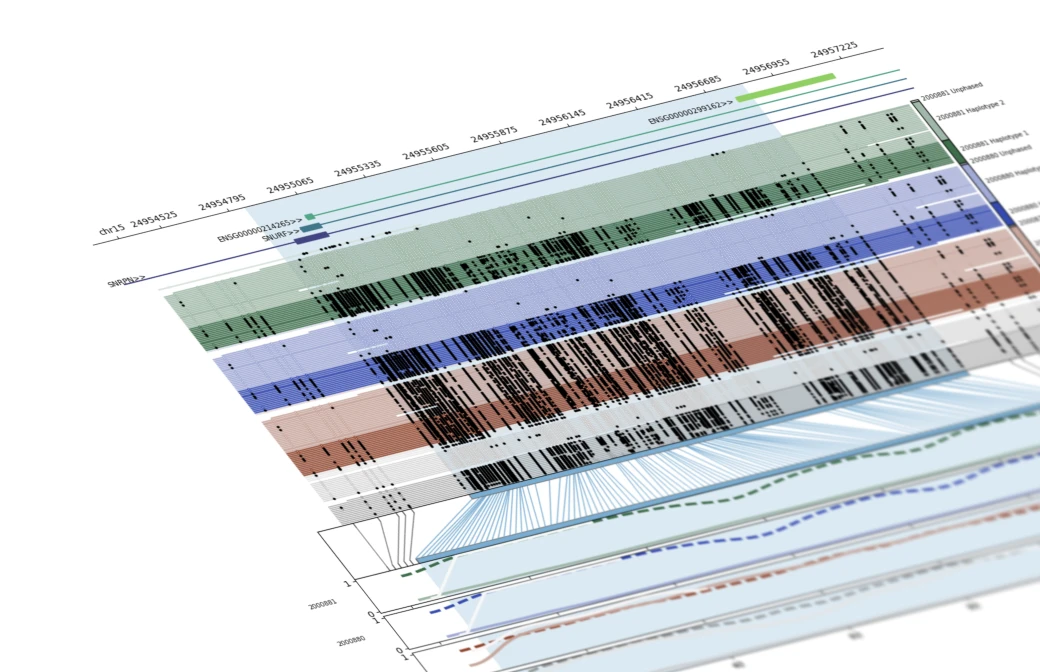
Investigate structural variants short-read misses. Large deletions, duplications, inversions, and complex rearrangements are where short-read pipelines lose sensitivity — and where many unsolved cases hide. Lucid resolves them natively at base-pair precision, detecting and prioritizing candidate-pathogenic SVs.

the solution
Secondary and Tertiary Analysis.
Lucid’s modular architecture lets you enter the pipeline at any stage - raw reads (FASTQ), aligned data (BAM), or called variants (VCF).
From FASTQ or BAM.
Evidence-based Interpretation.
Tailored to your workflow.
Competitor Analysis
Why Researchers Choose Lucid Genomics
For patient cases where exome and short-read WGS came back negative, Lucid leverages long-read sequencing to recover the SVs, repeat expansions, and complex rearrangements that drive diagnostic yield in unsolved cases.
Lucid Genomics Platform
Standard Platforms
Data formats
VCF, FASTQ or BAM
VCF, FASTQ or BAM
Genome scope
Coding & non-coding
Variant scope
Q3 2026
Multi-omics integration
Yes (e.g. index LR + parental SR WES)
Mixed Technology analysis
RNA-seq, Methyl., Epigenetics & Hi-C
HPO variant matcher
SNVs, SVs & tandem repeats
3D genome architecture (TADs)
Yes
Yes
Yes
Yes
Yes
Yes
Yes
Yes
ACMG Guidelines
Yes
Coding (2%)
Some
SNVs
Some
Some
No
No
No
No
No
No
No
No
No
No
Fast IGV-like visualization
Cohort analysis
Advanced CMRG analysis
Phased compound heterozygosity
Differentially methylated regions
Detailed SV analysis incl. regulatory elements
Coverage and Circos plots
Custom feature request
Long-read Specific
Yes
Validation
What customers say.


Lucid is a spin-off of the Max Planck Institute for Molecular Genetics and Charité Berlin, built on the science of the Mundlos lab, one of Europe's leading rare-disease genomics groups.


Lucid Genomics' cohort analysis tool has been a game changer for our research. It’s intuitive yet powerful, allowing us to quickly compare patient groups and uncover key insights. The platform has streamlined our workflow and enabled faster, data-driven decisions.
Dr. Felix Boschann,
Medical Geneticist, Charité


Lucid cracked 30-year-old unsolved cases — revealing hidden variants and redefining how we see the genome. Simply one of the best tools to unlock the Dark Genome.
Prof. Pawel Stankiewicz,
M.D., Department of Molecular & Human Genetics at Baylor College of Medicine


Lucid integrates AI-driven algorithms allowing our team to quickly identify genetic variants and actionable insights with incredible precision. The intuitive interface and seamless collaboration tools have transformed how we analyze and share insights across teams.
Dr. Marco Saverese,
Principal Investigator, Folkhalsan Research Center
FIND YOUR SOLUTION
Cut through the noise.
Get to the answer.
Whether you're making diagnostic decisions or pushing the boundaries of discovery, Lucid meets you where the data gets complex.
Frequently Asked Questions
Is my data secure and GDPR-compliant?
Yes. Lucid runs on a GDPR-compliant AWS server in Frankfurt and adheres to the highest data privacy and security standards.
Is Lucid IVDR-certified?
We are currently preparing our IVDR submission and working closely with the relevant regulatory bodies throughout the process.
Can CLIA labs use Lucid?
Yes. Lucid supports your validation study to bring the platform onto your LDT (laboratory-developed test) program.
Do you support on-premise deployment?
Yes, on-premise deployment is possible. The specific requirements are discussed directly with our technical team to fit your infrastructure.
Does Lucid support long-read whole genome sequencing?
Yes. Lucid is purpose-built for long-read WGS analysis, covering SNVs, structural variants, repeat expansions, methylation, non-coding variants, and HPO-based prioritization.
Does Lucid support short-read genome sequencing?
Yes. Lucid supports short-read sequencing in addition to long-read WGS — and you can run mixed family analyses that combine short- and long-read data within the same case.
How do I get started?
We begin with a short intro call to understand your priorities, including a tailored demo and Q&A. From there, we offer a free trial where you can test the platform using public samples or your own in-house samples. Once you've seen it in action, we plan Phase 2: rolling Lucid into your workflow.